Case Study: Ghana Standards Authority origin-level traceability framework to strengthen proof of origin for the country’s key agricultural commodity exports

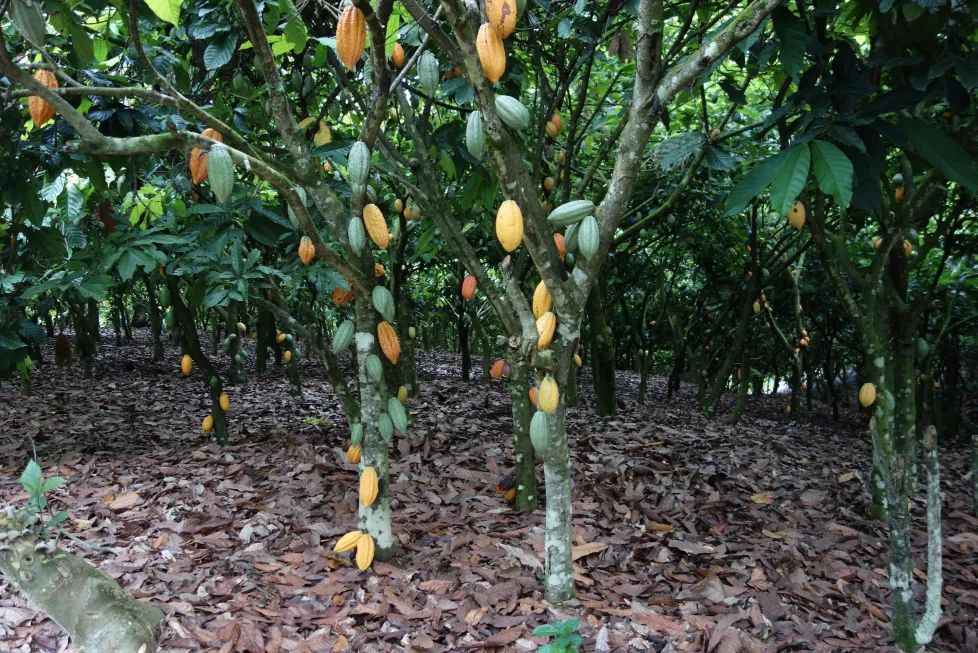
Agricultural commodity markets are increasingly defined by the ability to prove origin, demonstrate compliance with deforestation regulations such as EUDR, and support Protected Designation of Origin frameworks through secure and auditable data. In global trade, origin-level traceability is becoming a prerequisite for market access, requiring governments and exporters to bind physical commodities to verified digital records from source to shipment.
Agricultural supply chains are fragmented and dispersed, making it challenging to capture reliable origin data at the source and preserve its integrity through aggregation, processing, and export.
Case Study: Ghana Standards Authority
The Ghana Standards Authority, acting on behalf of the Ghanaian government, implemented an origin-level traceability framework to strengthen proof of origin for the country’s key agricultural commodity exports. As global buyers and regulators intensified scrutiny around deforestation exposure, sustainability compliance, and
authenticity claims, traditional paper-based certification systems were no longer sufficient to provide verifiable and real-time assurance. The government required a solution capable of capturing source data at the production level and maintaining chain-of-custody integrity through aggregation and export processes.
At Myneral Labs we deployed our MynOne devices across production and aggregation points to enable secure and geolocated data capture in low-connectivity rural environments. RFID tags and other physical identification mechanisms were assigned to commodity batches, linking physical volumes to unique digital identities. All data was anchored within Myneral Labs’ blockchain infrastructure and structured through our software layer, Myneral Trace, creating a live control tower environment accessible to the Ghana Standards Authority. This architecture enabled verifiable proof of origin, strengthened compliance with deforestation and export regulations, and provided a digital backbone supporting the country’s agricultural trade credibility in international markets.
Technology Architecture for Origin and Chain-of-Custody Traceability
In agricultural commodities, the primary traceability risk emerges at the point of origin, where production is dispersed and documentation practices vary widely. Our MynOne devices address this constraint by enabling on-site data capture and geolocation registration directly at farms and collection centers, even in environments with limited connectivity. By recording origin data at the earliest stage, the system reduces reliance on retrospective certification and mitigates the risk of unverifiable sourcing claims.
Our physical tagging identifiers created a persistent association between commodity batches and their digital records as products move through storage, aggregation, and export channels. Each movement or handling event is recorded and verified, preserving chain-of-custody continuity. Data captured in the field is secured within Myneral Labs’ blockchain layer and organized through Myneral Trace into a centralized control tower interface. This structure allows public authorities to monitor commodity flows, validate origin claims, and generate structured data outputs aligned with EUDR requirements, Protected Designation of Origin standards, and emerging Digital Product Passport frameworks.
Our modular design enables deployment across different geographies and institutional contexts, demonstrating that traceability infrastructure can be implemented not only within private enterprises but also at public levels. By integrating a secure digital
backbone, our solution transforms agricultural traceability from static certification into a continuous and verifiable origin management framework.
Traceability in Agricultural Commodities
Global agricultural trade is undergoing structural change as environmental regulation, consumer transparency expectations, and trade compliance standards converge. The European Union Deforestation Regulation and similar due diligence frameworks are increasing pressure on exporting countries to demonstrate that commodities are sourced responsibly and without contribution to illegal deforestation. At the same time, Protected Designation of Origin schemes and authenticity certifications require stronger evidence linking products to specific geographic origins.
For producing countries, traceability is no longer only a quality assurance tool but a strategic economic asset. The ability to provide verifiable proof of origin influences market access, pricing power, and long-term trade relationships. As data-driven compliance becomes embedded in international trade systems, governments and exporters are progressively adopting digital traceability architectures that bind origin data to secure and auditable records. In this evolving landscape, origin-level traceability infrastructure is becoming foundational to sustaining competitiveness and regulatory alignment in global agricultural commodity markets.